BUSINESS SITES

From design and manufacturing to quality and supply chain — every process is seamlessly connected, forming the foundation of competitiveness.

INTOR BUSINESS SITES

Production Sites as Competitiveness, INTOR’s Global Manufacturing Network

Network

GLOBAL PROVIDER

Globalized & Localized ESS Supply Framework

With production bases established in Korea, the United States, and China, we are able to respond swiftly to the demands of the global market.

With production bases established in Korea, the United States, and China,
we are able to respond swiftly to the demands of the global market.

INTOR Network

Business Sites

  1. HQ& Plant: Gimpo Plant 1, Gimpo Plant 2, Gwangyang, Gwangyang Port, Suncheon, Yeosu Plant
  2. R&D Center: Incheon Cheongna Corporate R&D Center
  3. Overseas Operations: INTOR USA Arizona Plant, INTOR CHINA Xiping Plant

Gimpo Headquarters and Plants 1 & 2

Gimpo Headquarters & Plant 1 – 56,567.5 ft²
Gimpo Plant 2 – 59,015.8 ft²

Key Products

ESS Rack, IDC Rack, HVAC
FSS, Chiller, Elec. Comp.

Production CAPA

Rack: 7,000 units/year
HVAC: 3,600 units/year

Gwangyang Plant

Area: 326,270 ft²

Key Products

ESS Enclosure Ass’y
Skid

Production CAPA

2,000 units/year
2,000 units/year

Gwangyang Port Plant

Area: 95,930 ft²

Key Products

ESS Container

Production CAPA

3,000 units/year

Yeosu Plant

Area: 19,800 ft²

Key Products

ESS Container

Production CAPA

200 units/year

Suncheon Plant

Area: 854,417.4 ft²

Key Products

ESS Enclosure Ass’y

Production CAPA

3,000 units/year

Arizona Plant

Area: 455,460 ft²

Key Products

ESS Enclosure Ass’y

Production CAPA

3,000 units/year

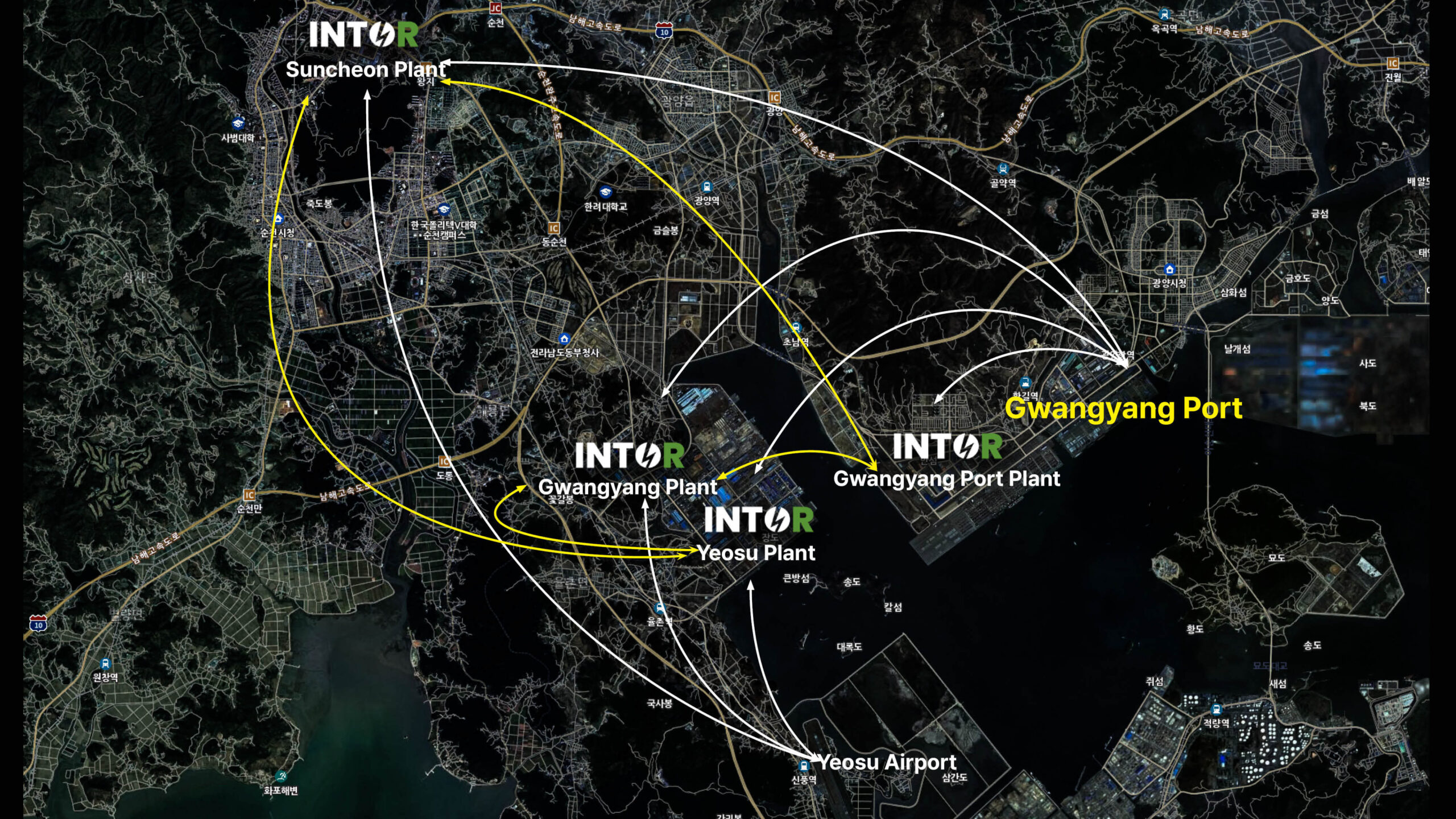
Cluster Manufacturing Network

Factory Specialization Strategy by Product Line

  • Strategic optimization of manufacturing locations based on SCM
  • Maximizing productivity through inline control and robotic automation
  • Optimized supply chain operations based on production sites adjacent to Gwangyang Port, enabling prompt and efficient material supply and finished product delivery.

Source: NGII, Korea Open Government License Type 1

18

Supply Chain Efficiency

  • Enhanced supply chain efficiency
  • Increased proximity to parts and materials
  • Strengthened competitiveness through reduced logistics and production costs
Port

Korea’s No.1 Logistics Hub, Gwangyang Port

  • Among the highest annual cargo volumes in Korea
  • Optimal location adjacent to major industrial complexes
  • Logistics competitiveness connected to the global network

Scroll to Top